
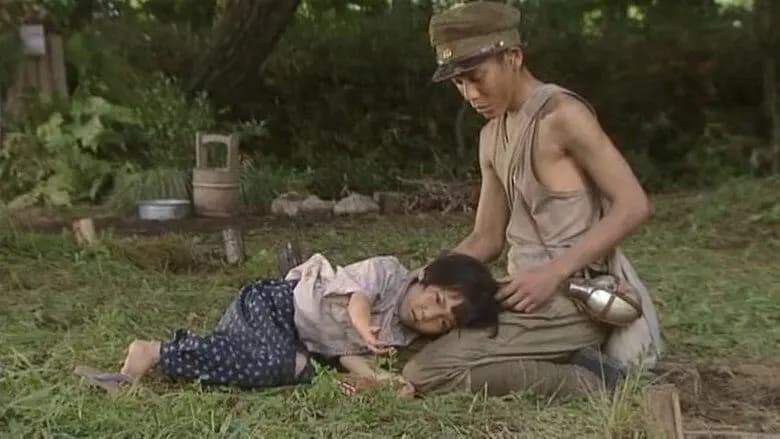
A Television Event
This adaptation was produced for Nippon Television and broadcast in 2005, the year marking the 60th anniversary of the end of World War II.

Le Tombeau des lucioles
火垂るの墓
Hisako loses her home in Tokyo to Allied bombing. With her husband fighting somewhere in Asia, she and her two children evacuate to a suburb of Kobe, where they share a house with Hisako's cousin, Kyoko. Kobe is bombed and Kyoko is killed. Hisako is forced to take care of Kyoko's two children in addition to her own, but there is not enough food for everyone.
Why it's in the Vault
This 2005 Grave of the Fireflies is an odd and fascinating companion to the version most viewers know. By moving into live action and giving greater weight to the aunt and the adults surrounding Seita and Setsuko, it turns the same wartime tragedy slightly sideways: less like a memory sealed inside childhood, more like a family collapsing under hunger, fear and impossible choices. It is not the definitive Grave of the Fireflies, but that is precisely why it belongs in the Vault.
— Matty, Curator of the Vault*
Atmosphere
Contains wartime bombing, starvation, illness, death and sustained depictions of children suffering during the final months of World War II.
Dans les coulisses
This adaptation was produced for Nippon Television and broadcast in 2005, the year marking the 60th anniversary of the end of World War II.
Unlike the animated film's intense alignment with Seita and Setsuko, the drama substantially develops the aunt and her household, reframing parts of the tragedy through the pressures faced by the adults.
Setsuko was played by Mao Sasaki, whose performance as the young child became one of the drama's emotional focal points.
Hoshi Ishida took on Seita, placing real child performers at the center of material internationally associated above all with Studio Ghibli's animated adaptation.
Aux origines
The television drama adapts Nosaka's semi-autobiographical novella about Seita and Setsuko, siblings struggling to survive in wartime Japan after the destruction of their home. Nosaka drew the story from his own experiences during the war and from the death of his younger sister, transforming personal guilt and loss into one of Japan's most enduring accounts of civilian childhood during the conflict.
Palette
Images
